
Case — Branding · Interior
Hareer.
A contemporary Aleppian dining experience — brand identity, interior architecture and a material palette shaped by the cultural journeys of the Silk Road.
A Culaniary journey
Aleppian Authentic cusine
Hareer was created as a contemporary expression of Aleppian cuisine—rooted in the city’s culinary depth, yet open to the influencesthat have travelled through it over time.
Alep had the privilege of developing the interior experience, creating a contemporary expression that remains true tospace come together as one journey.
BRAND IDENTITY · INTERIOR DESIGN · EXPERIENCE
Design Narrative
Threads of Culture, Carried Through Aleppo
The Silk Road became the starting point for the Hareer narrative.
For centuries, Aleppo connected people, ingredients, crafts, and ideas moving between East and West.Hareer draws from this history—not by recreating the past, but by interpreting the movement and exchangethat shaped the city.
The concept of silk became a metaphor for the experience: fluid, layered, refined, and formed through themeeting of many different threads.
AleppianHeritaage
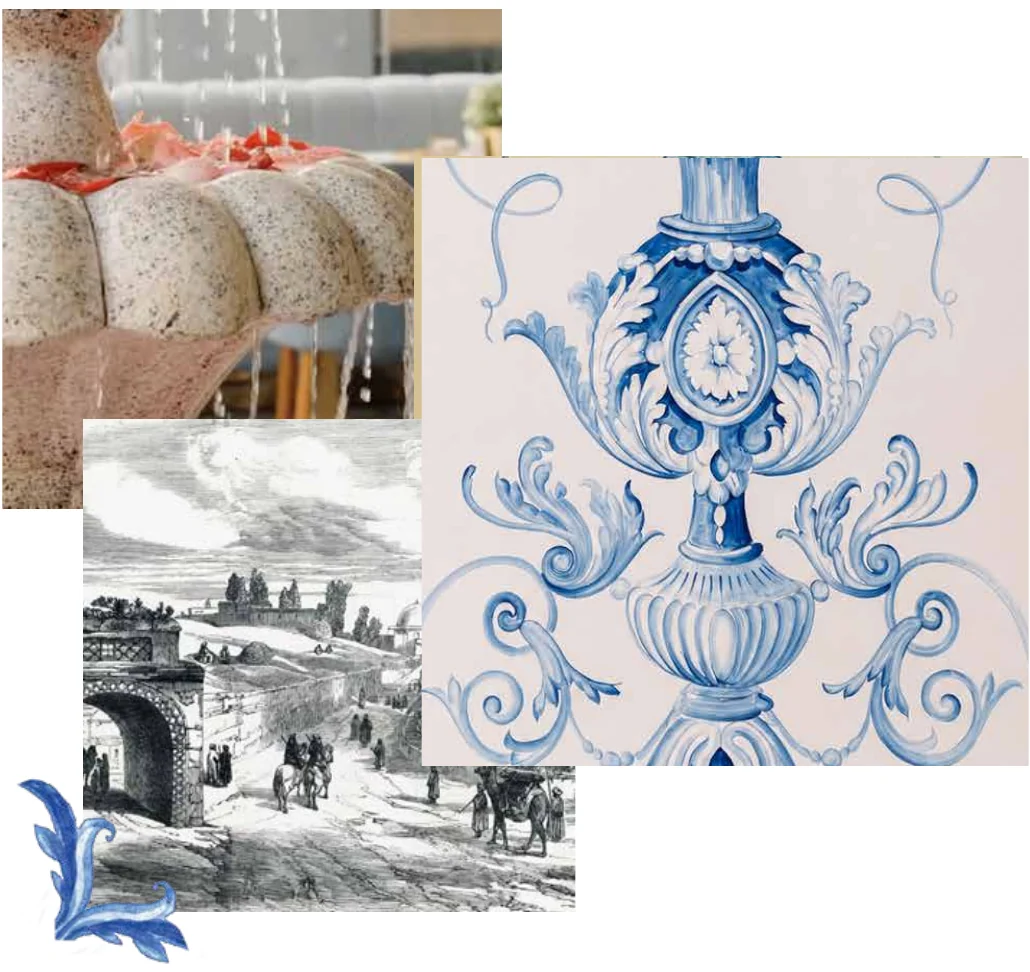
The design draws from Aleppo’s architecture, decorative arts,culinary culture, and long history of exchange.Rather than creating a nostalgic interpretation, we selectedessential elements—arches, proportion, craft, colour, andornament—and translated them into a more contemporary visualand spatial language.
BotanicalRoutes
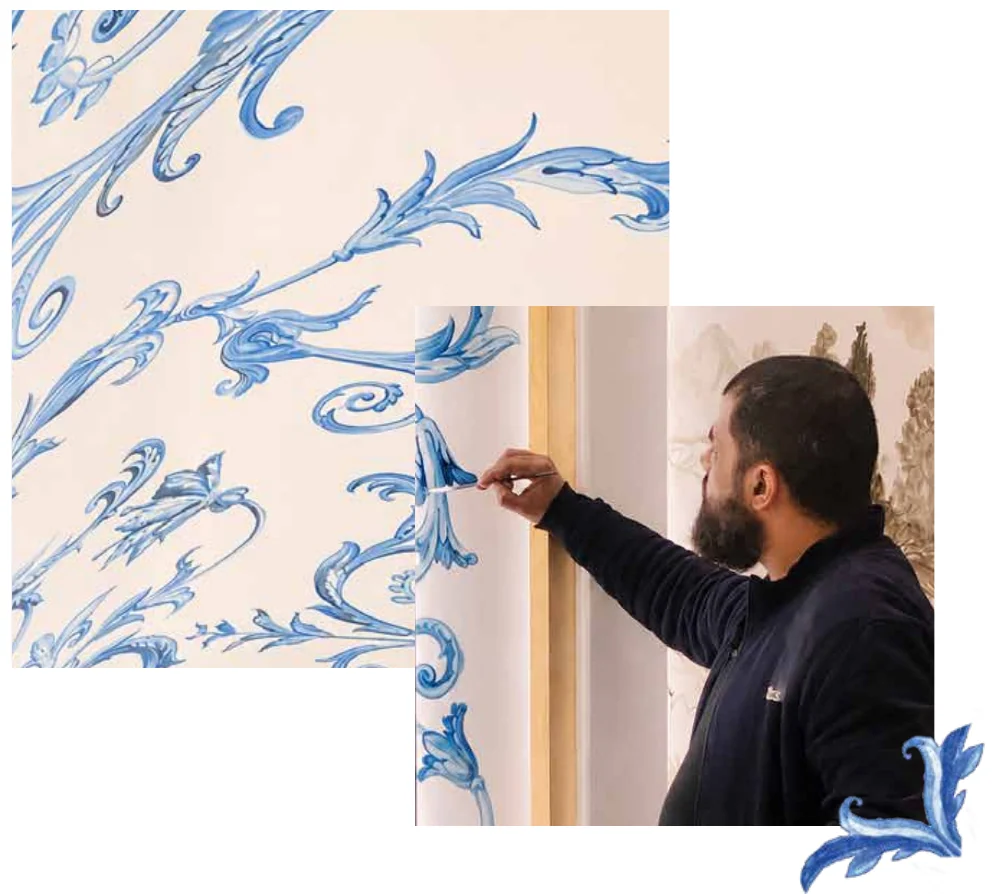
Inspired by the Silk Road, the botanical language brings togetherplants, ingredients, and decorative influences carried acrosscultures.
From Silkto Identity
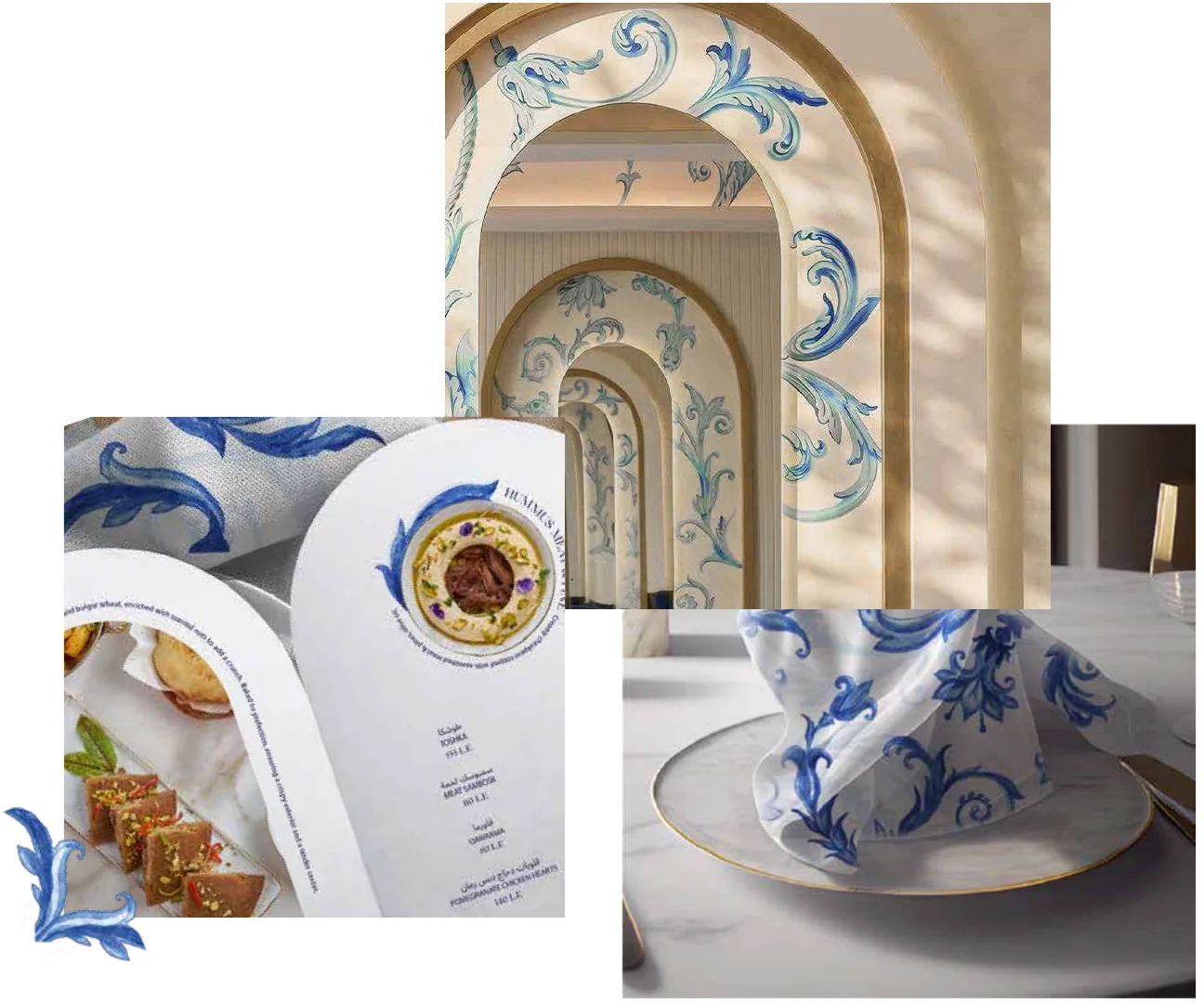
The softness and flow of silk informed the identity’s lines, patterns,and compositions.Curved forms move across menus, tableware, signage, and graphicapplications, while the deep blue palette gives the brand a refinedand recognisable presence.The identity feels detailed and expressive, yet calm enough tosupport the food and interior rather than compete with them.
Branding
A Brand Shaped as a Journey
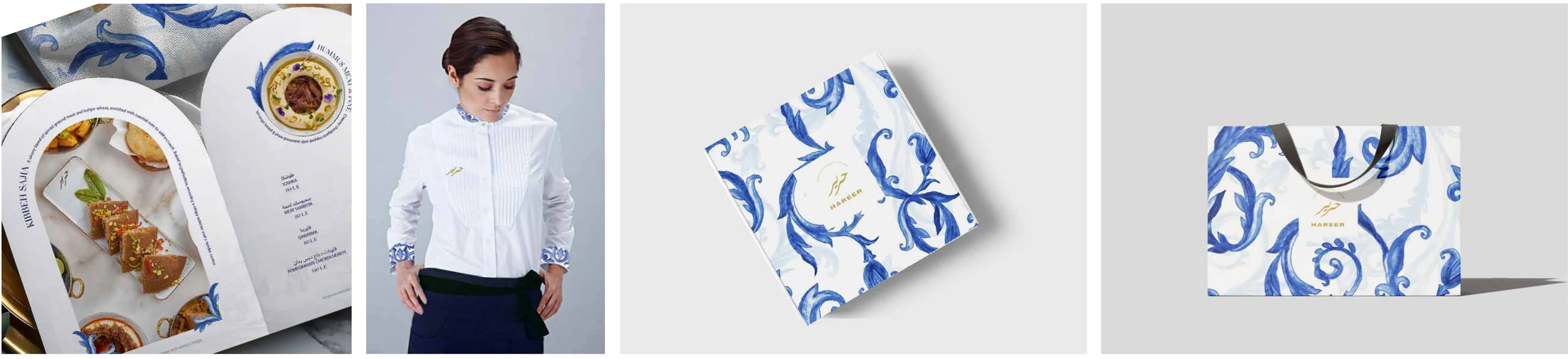
The Hareer identity extends across menus, tableware, uniforms, printed materials, and in-space graphics.Each application carries the same visual rhythm, allowing the guest to encounter the story gradually—from the first brandimpression to the details placed around the table.
3D Design
Translating the narrative into space
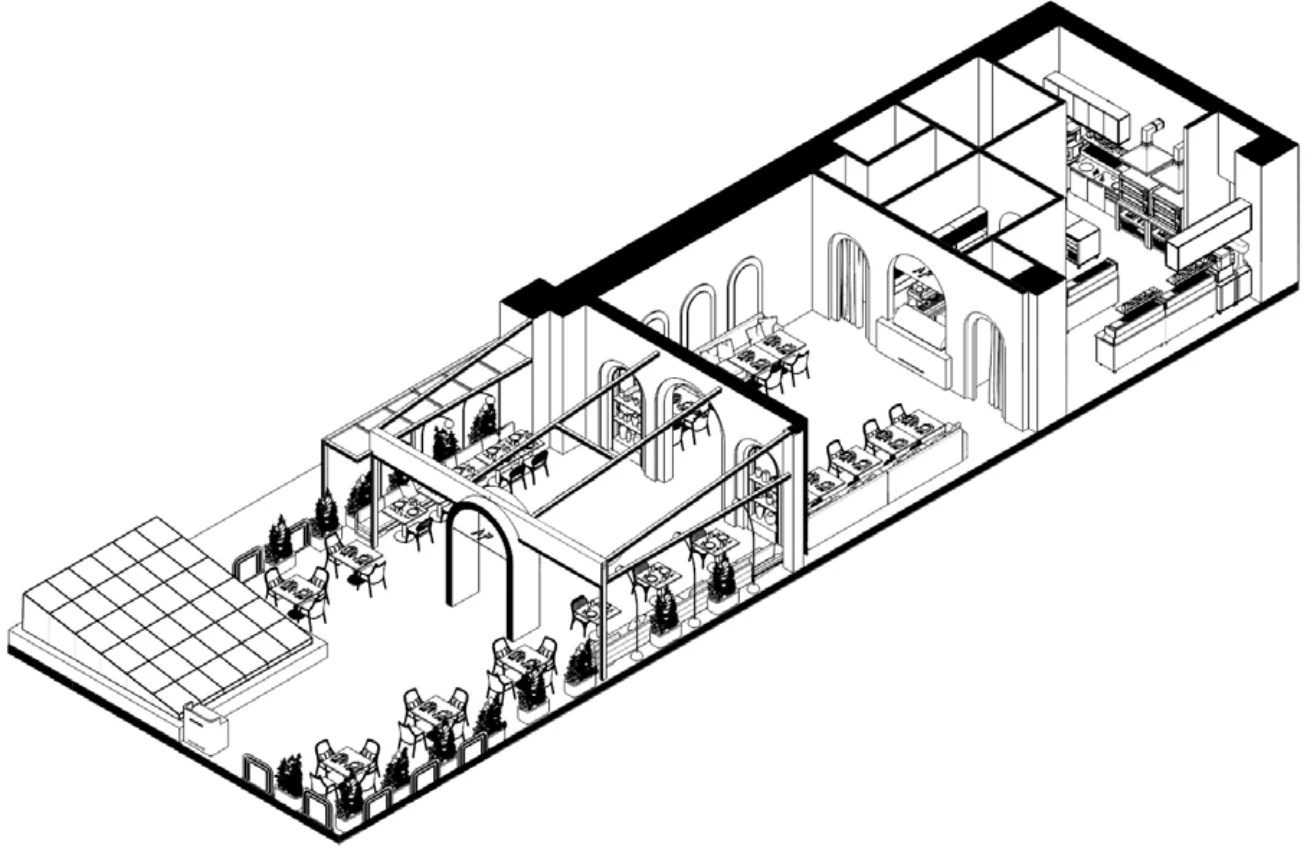
Through 3D design, we studied how the narrative could be experienced through movement, proportion, material, lighting, andarchitectural rhythm.The arches establish a sequence through the restaurant, while patterned surfaces, framed openings, warm textures, and blueaccents connect the interior to the identity.
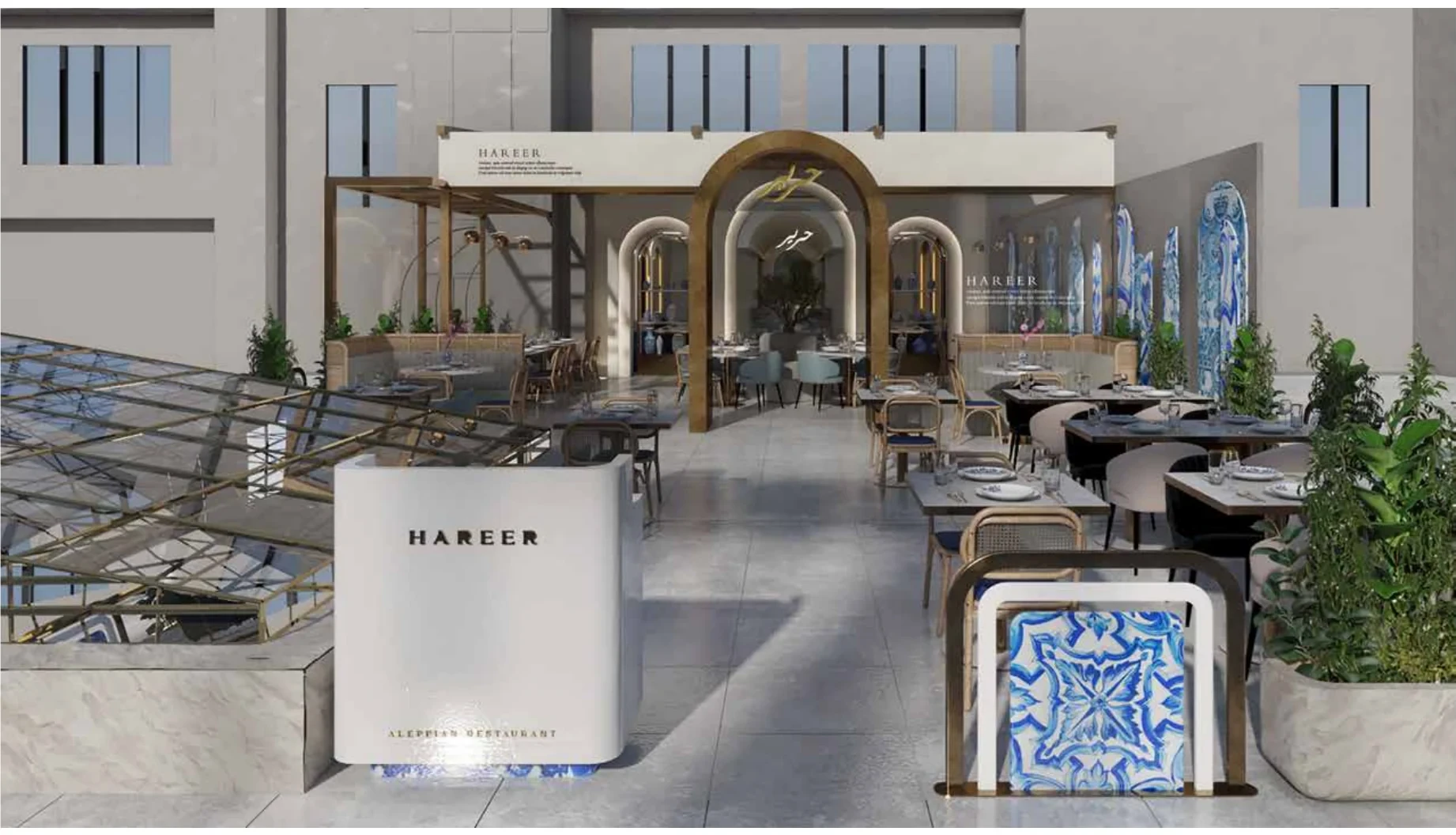
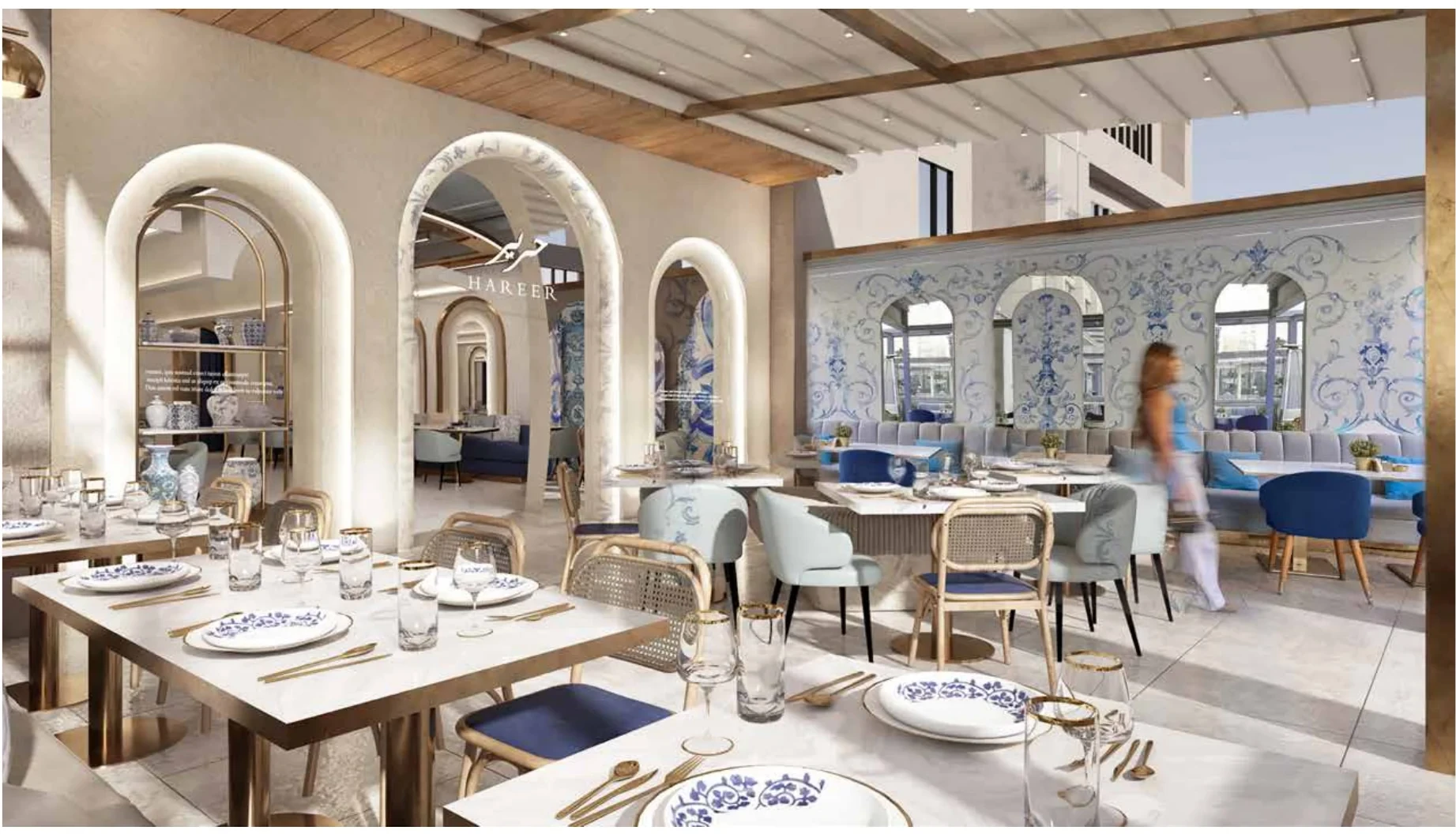
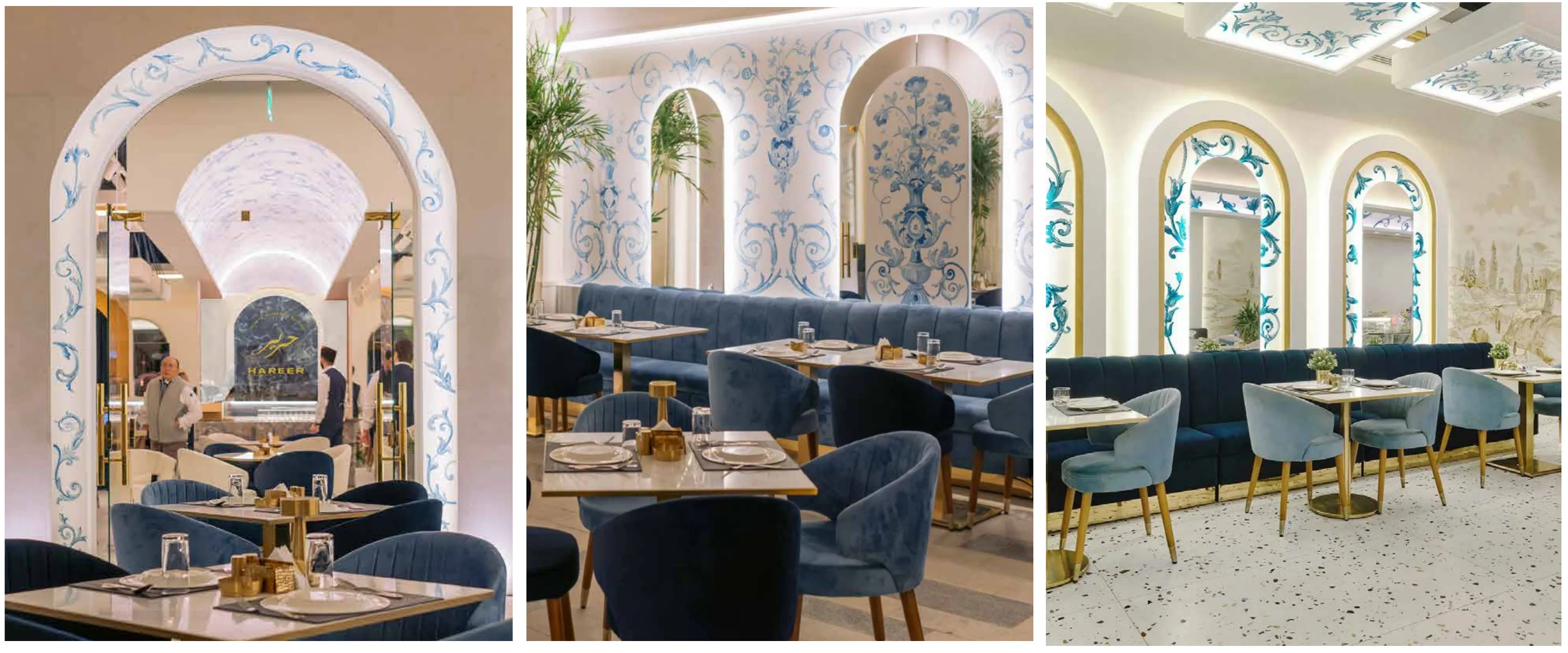
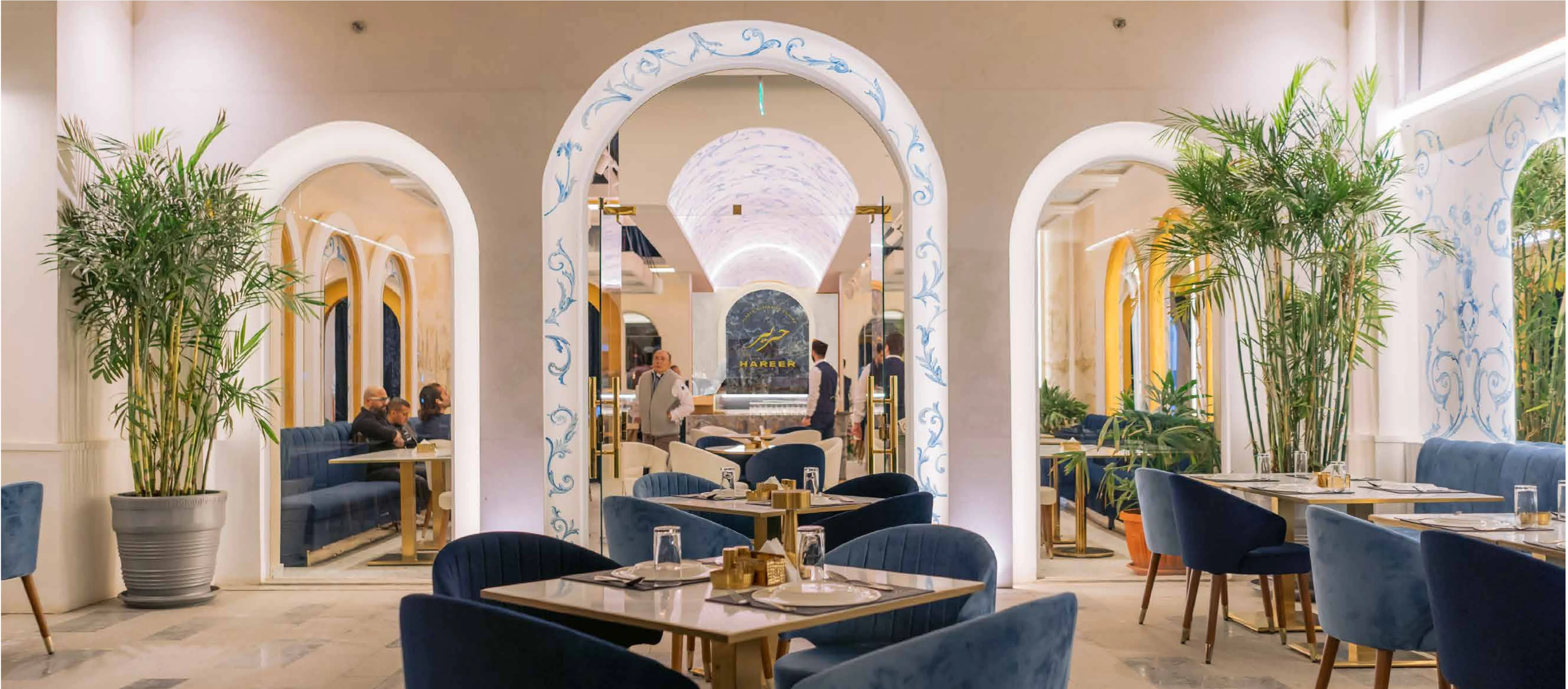
The completed interior balancesarchitectural presence with a sense ofease.Layered arches organise the space, softmaterials bring warmth, and carefullyplaced botanical and graphic detailsallow the Hareer story to unfold withoutoverwhelming the dining experience.The result is refined butwelcoming—designed around gathering,discovery, and shared food.
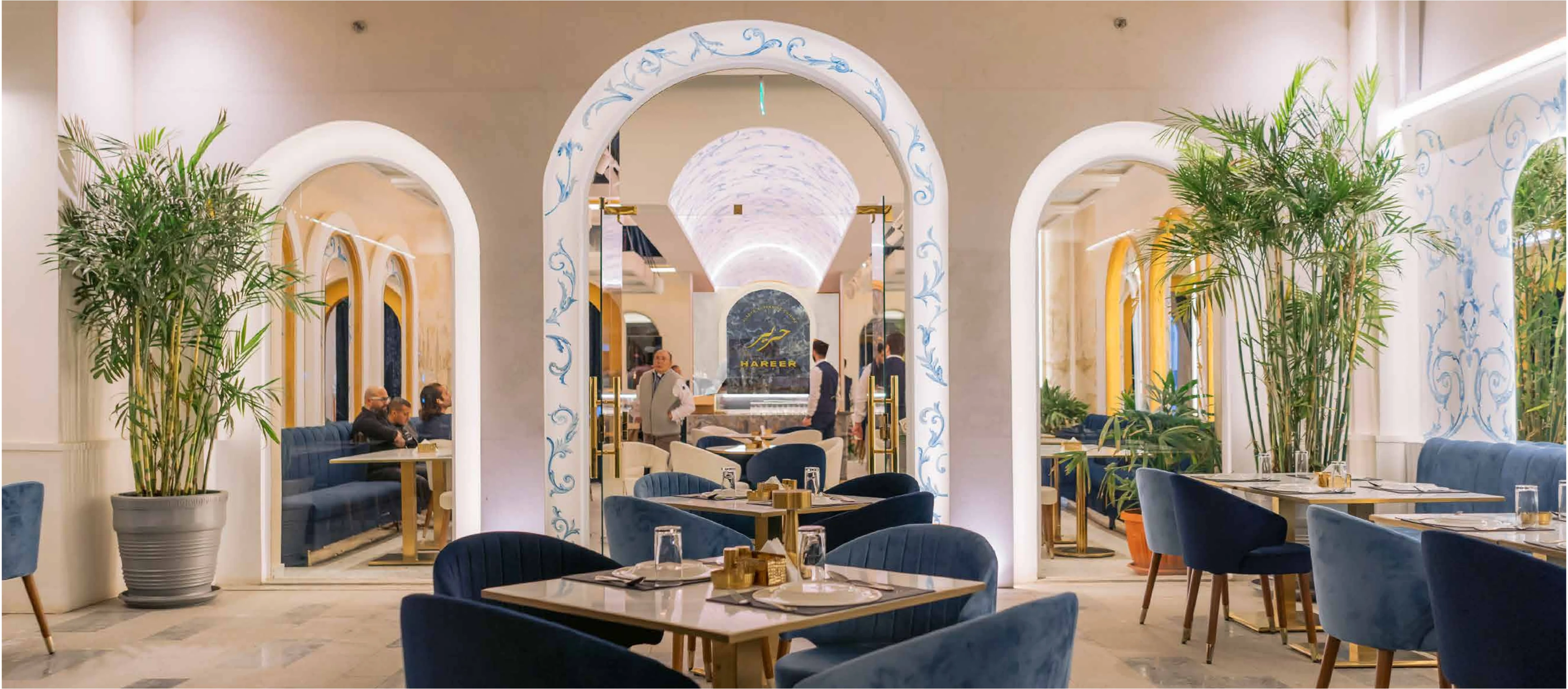
From the framed arches and painted motifs to the table settings, signage, materials, and lighting, each detailbelongs to the same visual world.Together, these elements transform the Silk Road narrative from an idea into a complete restaurantexperience—rooted in Aleppo, yet open to the cultures that have always passed through it.
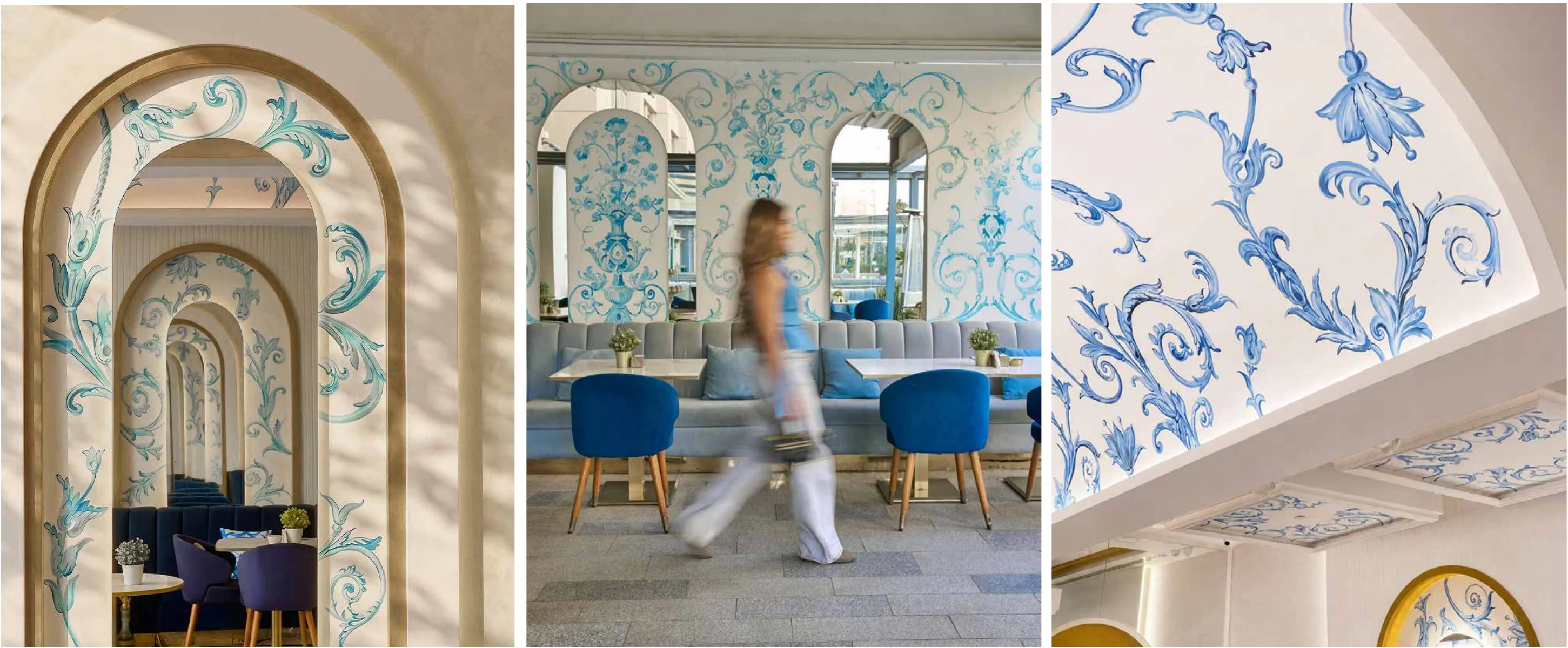
The completed interior brings theHareer story together through layeredarches, warm materials, botanicaldetails, and a refined bluepalette—creating a contemporarydining experience rooted in Aleppo andshaped by the cultural journeys of theSilk Road.
A Culaniary journey
Aleppian Authentic cusine
Hareer was created as a contemporary expression of Aleppian cuisine—rooted in the city’s culinary depth, yet open to the influences that have travelled through it over time.
Alep had the privilege of developing the interior experience, creating a contemporary expression that remains true to space come together as one journey.
Brand Identity · Interior Design · Experience
Design Narrative
Threads of Culture, Carried Through Aleppo
The Silk Road became the starting point for the Hareer narrative.
For centuries, Aleppo connected people, ingredients, crafts, and ideas moving between East and West. Hareer draws from this history—not by recreating the past, but by interpreting the movement and exchange that shaped the city.
The concept of silk became a metaphor for the experience: fluid, layered, refined, and formed through the meeting of many different threads.
Aleppian
Heritaage
The design draws from Aleppo’s architecture, decorative arts, culinary culture, and long history of exchange.
Rather than creating a nostalgic interpretation, we selected essential elements—arches, proportion, craft, colour, and ornament—and translated them into a more contemporary visual and spatial language.
Botanical
Routes
Inspired by the Silk Road, the botanical language brings together plants, ingredients, and decorative influences carried across cultures.
From Silk
to Identity
The softness and flow of silk informed the identity’s lines, patterns, and compositions.
Curved forms move across menus, tableware, signage, and graphic applications, while the deep blue palette gives the brand a refined and recognisable presence.
The identity feels detailed and expressive, yet calm enough to support the food and interior rather than compete with them.
Branding
A Brand Shaped as a Journey
The Hareer identity extends across menus, tableware, uniforms, printed materials, and in-space graphics.
Each application carries the same visual rhythm, allowing the guest to encounter the story gradually—from the first brand impression to the details placed around the table.
3D Design
Translating the narrative into space
Through 3D design, we studied how the narrative could be experienced through movement, proportion, material, lighting, and architectural rhythm.
The arches establish a sequence through the restaurant, while patterned surfaces, framed openings, warm textures, and blue accents connect the interior to the identity.
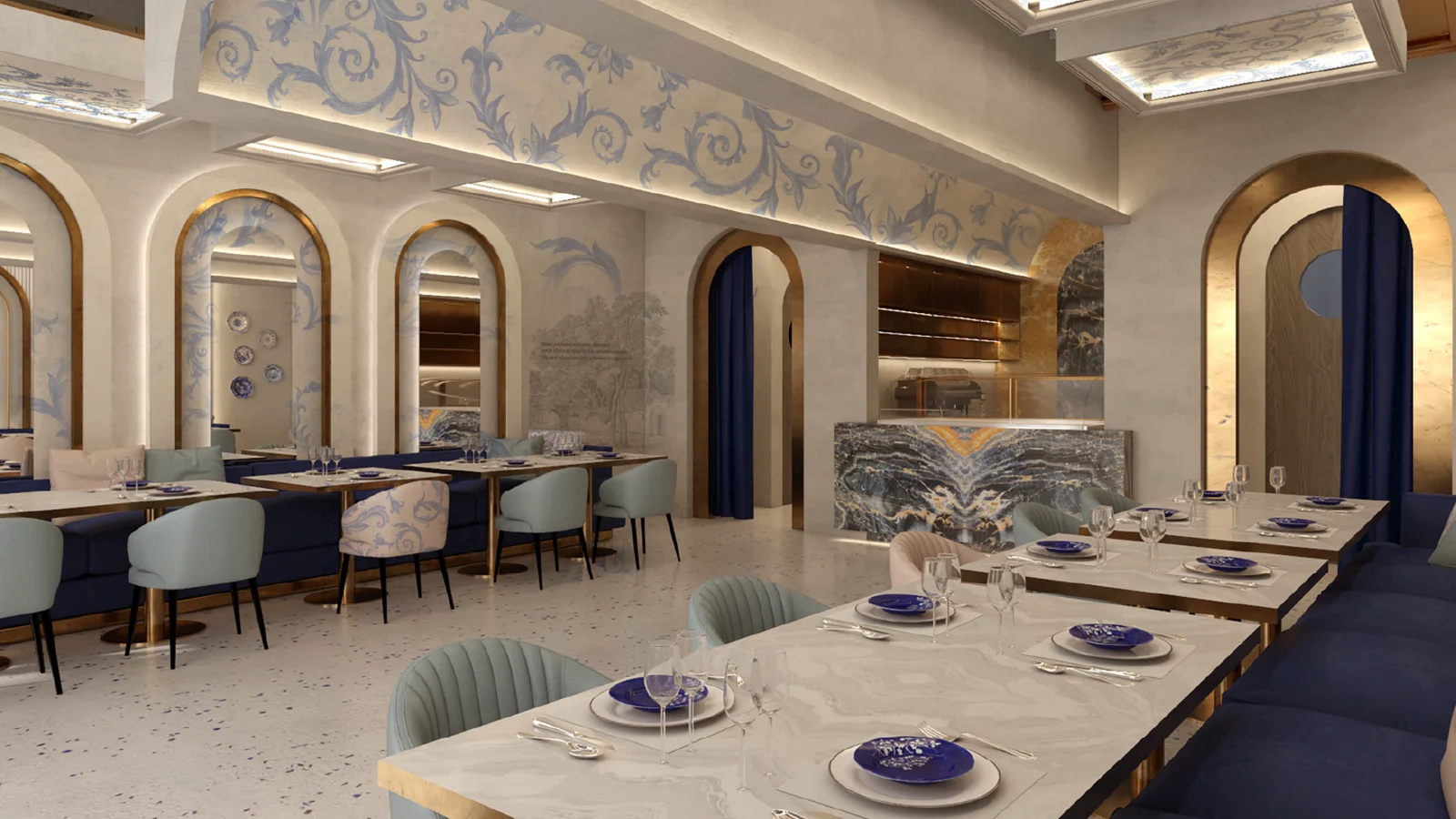
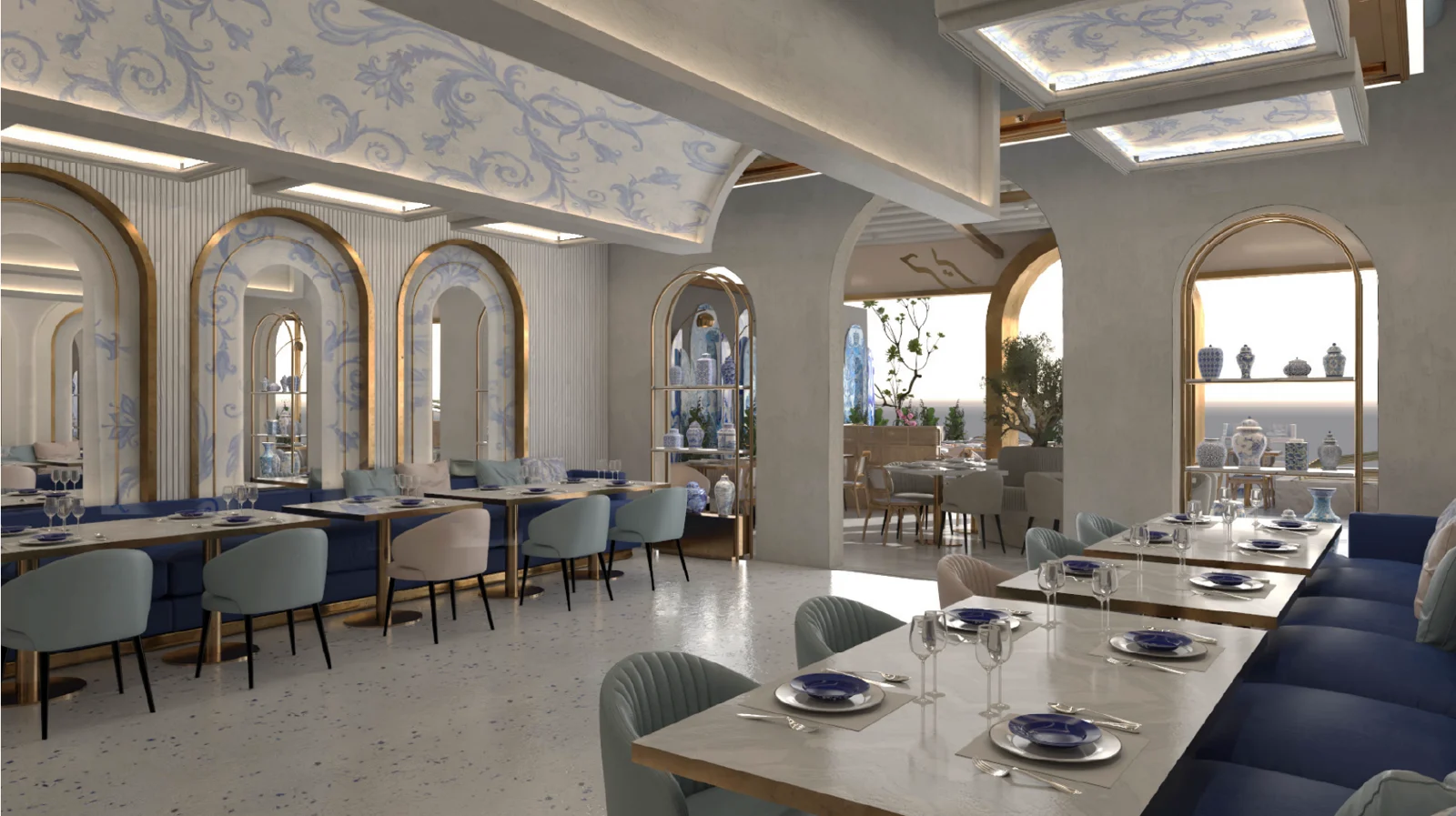
The completed interior balances architectural presence with a sense of ease.
Layered arches organise the space, soft materials bring warmth, and carefully placed botanical and graphic details allow the Hareer story to unfold without overwhelming the dining experience.
The result is refined but welcoming—designed around gathering, discovery, and shared food.
From the framed arches and painted motifs to the table settings, signage, materials, and lighting, each detail belongs to the same visual world.
Together, these elements transform the Silk Road narrative from an idea into a complete restaurant experience—rooted in Aleppo, yet open to the cultures that have always passed through it.
The completed interior brings the Hareer story together through layered arches, warm materials, botanical details, and a refined blue palette—creating a contemporary dining experience rooted in Aleppo and shaped by the cultural journeys of the Silk Road.
Next case
Children’s Clinics